Interview with DEAMONOLITH
Welcome to the FILTHY DOGS OF METAL Webzine.
Could you give us a brief introduction to DEAMONOLITH (members, year of formation etc.)?
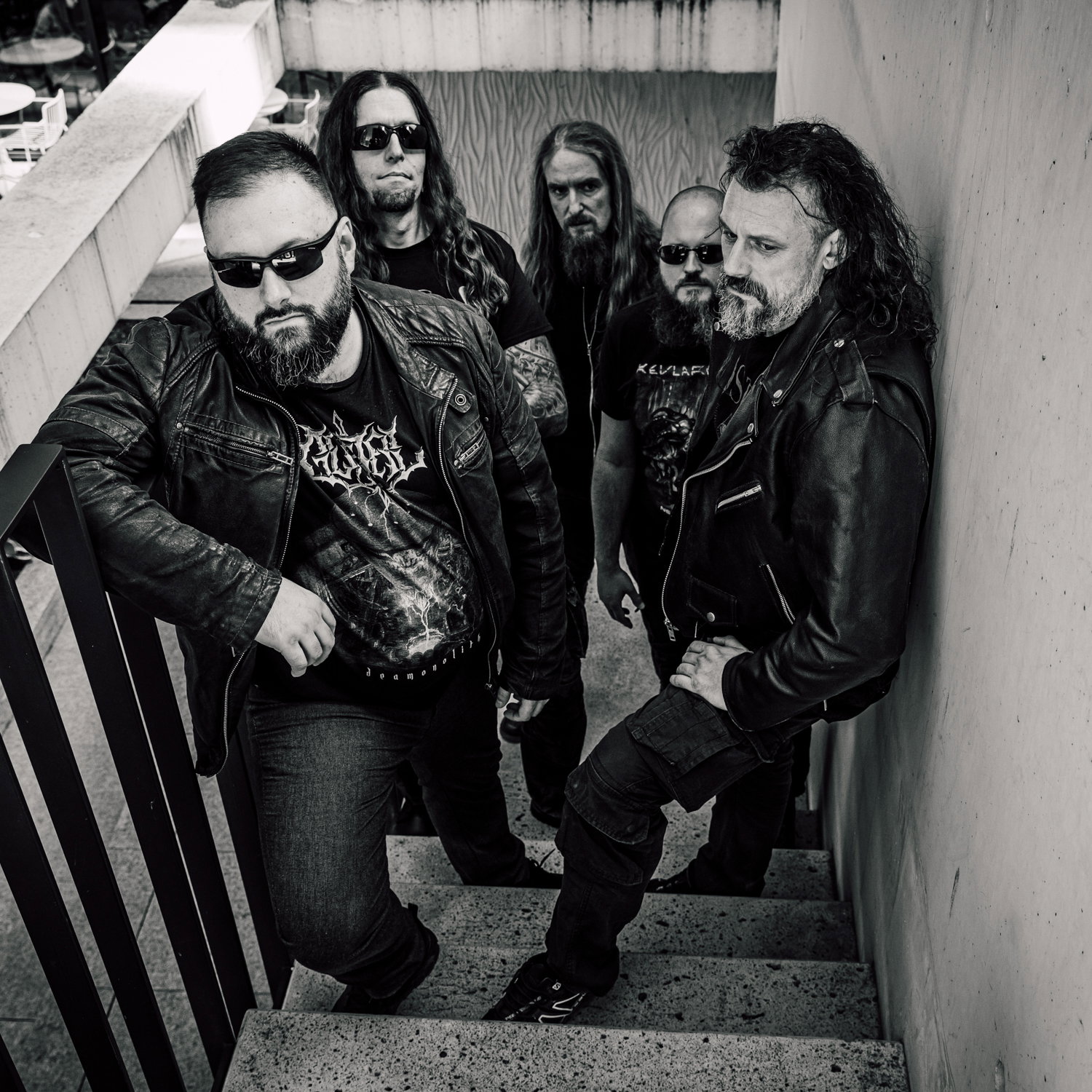
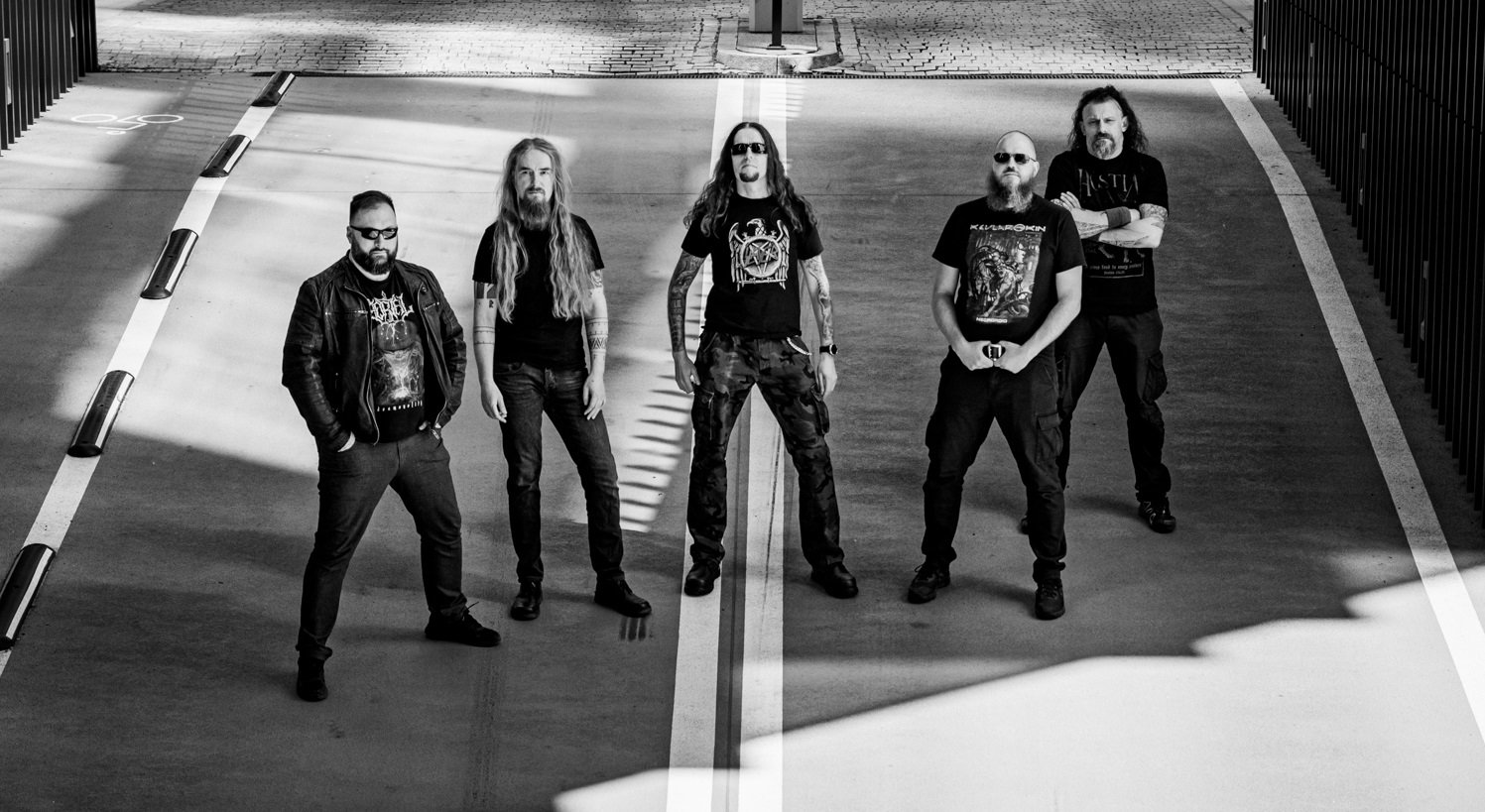
Marcin “Major” Meyer (guitarist): The band was officially founded between 2022 and 2023 by myself and Desecrate, the drummer. Initially our intention was to resurrect Gortal, a band we had been involved in for many years, which went on hiatus in 2015. We reconnected in 2020 and began composing new material. The idea of a resurrection ultimately proved unsuccessful, and, recognizing that a NEW creative energy had already emerged, we decided to establish a new entity under a new banner. Krzysztof “Desecrate” Szałkowski, the drummer - my longtime best friend, co - founder of Deamonolith and invaluable creative force. We have a special type of musical connection that allows us to take initial compositions to new heights. From my perspective - it’s top notch ituitive cooperation from the very beginning. We have known each other since the early Gortal days in 2003. We also played together in Pandemonium and spent a lot of time partying before we finally got a bit wiser. The vocalist is Łukasz “Kobuch” Kobusiński — Desecrate met him while they were playing together in Sarmat. That band’s direction shifted some time ago and Łukasz was ready for a new challenge. In the past he has also provided vocals for Mortis Dei among others. He wrote the lyrics and arranged the vocal lines himself. The final result definitely exceeded my initial expectations. He is a tough negotiator and a strong support when it comes to logistics and promotional activities. The second guitar is handled by Krzysztof “Sunrise” Świciak, probably the most unexpected musician in the line-up. When we were forming the band Michael from Pandemonium was playing bass with us. He recommended Krzysztof and invited him to a rehearsal. It clicked right from the start. Sunrise has an incredible imagination — he expanded the core of our compositions brilliantly adding a cosmic dimension to the music. On top of that he composed and recorded the intro and interlude (together with his son, who is a pianist). On a daily basis he is the mastermind behind the Łódź - based Aahur. In the past he played in bands such as Sacriversum, Imperator and Funeral Cult. The bassist is Łukasz ”Lukas” Matyja. He and Desecrate have known each other since their days in Symbolical. It turned out that Lukas had moved to Warsaw permanently some time ago and now lives right next door. Despite having very little time to acclimate Łukasz quickly grasped our ideas, mastered the material in no time and recorded fantastic bass guitar parts. He enriched our sound significantly.
Łukasz “Kobuch” Kobusiński (vocalist): Hello! And my part is to introduce Major, the guitarist. Co-founder of the band. A riff machine and a long distance runner. Maybe because of he is one Deamonolith has recorded only one song lasting more than 35 minutes till now? Known from Gortal for many years and Conquest Icon and Pandemonium for a period.
In 2024 you unleashed your debut album “The Monolithic Cult of Death.” What kind of feedback have you received from the underground scene and the metal press?
Major: The overall feedback has been excellent, exceeding our initial expectations. The underground scene and metal press have received it very positively. The only way to truly cross Styx was to give the album a real chance and listen to it multiple times in order to uncover its layers. As far as we know everyone who chose this path has been at least satisfied with both the sound and the lyrical content. No negative or even mediocre reviews have been noticed.
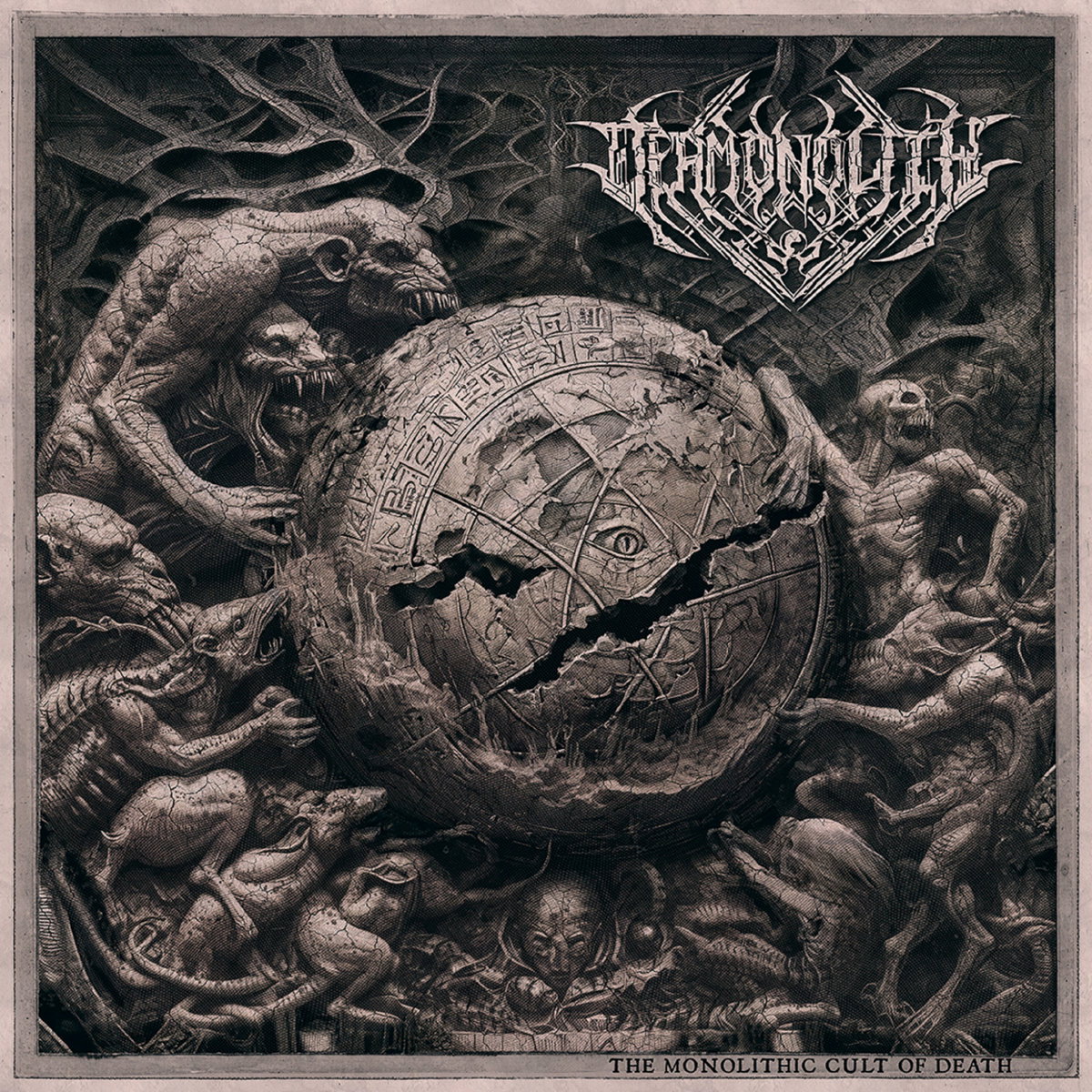
The cover artwork has a very dark and intense atmosphere. Could you tell us more about the concept behind it?
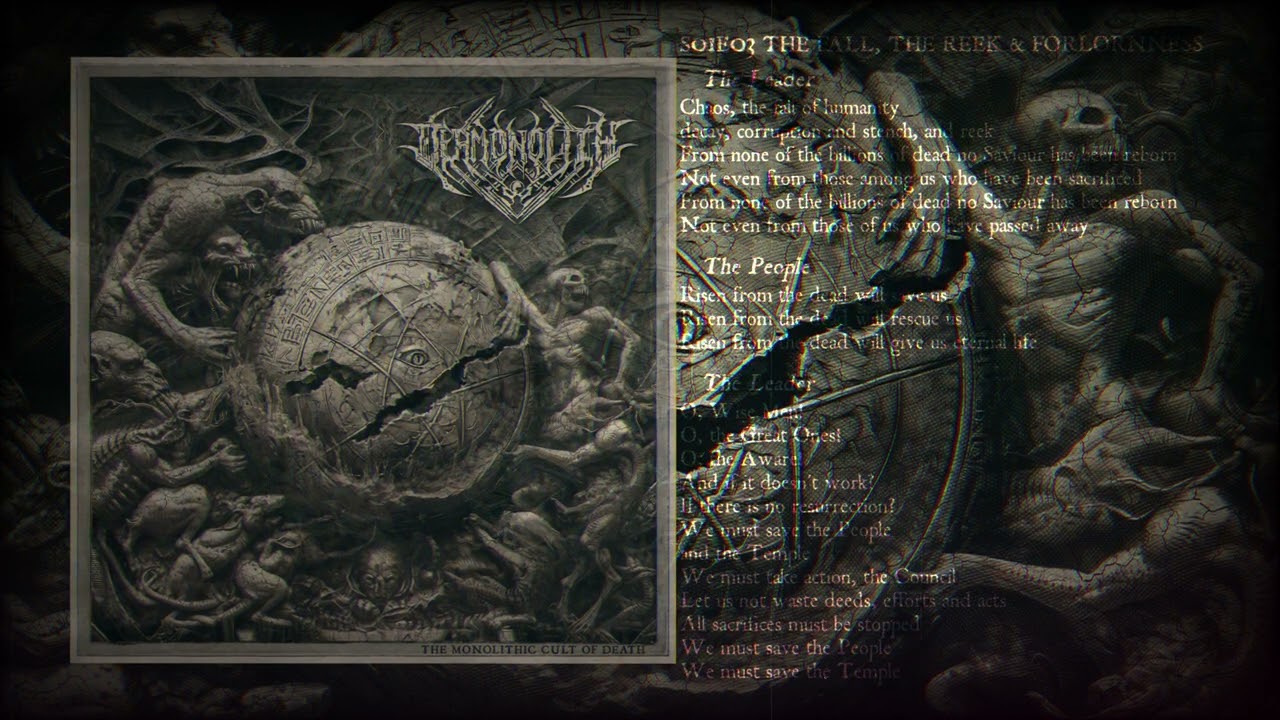
Major: The concept of a world torn apart by all kinds of monsters was my idea, which Desecrate developed using modern graphic tools. We spent many weeks searching for visual inspiration together. We then passed our initial ideas on to Michał “Xaay” Loranc, who further refined and expanded the concept enabling us to create the final version of the artwork. Xaay is a Polish graphic artist known for his distinctive work within the extreme metal scene for many years. Over the years he has collaborated with a wide range of notable artists and bands including Behemoth, Nile and Decapitated among many others from the international extreme metal scene. Once again working in this configuration we managed to produce an evocative and intense image fully aligned with the album’s lyrics and music. Xaay has been our graphic designer since Gortal’s debut and he masterfully brings our ideas to life, perhaps also because he understands and appreciates our compositions.
Krzysztof “Desecrate” Szałkowski (drummer): From my side, I approached the visual aspect a bit like an art director. I was looking for the right language and the right way to express the atmosphere and meaning of the album. In the end, we chose the strongest ideas together and passed them on to Xaay, who gave them the final shape and added a great deal of his own talent, vision and experience, turning them into the cover as it finally appears. It was important to me that the cover should not exist only as a separate image, but as an integral part of the whole story, fully connected with the music, the lyrics and the overall mood of the album.
What themes and ideas are explored in your lyrics?
Kobuch: Due to the fact we have recorded a very, very long music composition there was a need to put a concept story in the lyrics to it. The concept idea father is Desecrate. I had a long discussion with him while we were going back from the last Sarmat’s live show we have played together (and the last one till now as I know). His thoughts were interesting but quite chaotic (as he himself). I had to compose the lyrics as one continuous story the same way as the song is. So I created an abstract story of a group of people who think as chosen ones of themselves. Faith is their strength. And their curse, because in the process of seeking a redemption, or rather a messiah literally, they decide to act in a very cruel and inhuman way. I am leaving the whole story to you - feel free to explore the lyrics. And I would like to mention that I put the story in a not too common form in metal music. Death metal music especially. I created characters and let them play their roles. It may sound interesting and it is a challenge while playing the song live.
Desecrate: As the proud father of this idea :) — and a father of two in real life — I have to admit that it all grew out of my long obsession with post-apo themes. That is actually why Kobuch pulled me into Sarmat back then — apocalyptic vibes were already in the air. But that is a different story. With Deamonolith, I wanted to push it further and make it darker. For me, the real weapon of mass destruction is human nature itself — especially when fear, religion, fanaticism and blind faith take over. There is also a criticism of religiosity, of blind devotion to dogma and of the promise of some magical afterlife instead of taking care of what we have here and now. What fascinates me most is how easily someone who is absolutely sure he is right can abandon one set of beliefs and grab another one just to avoid facing reality. So yes, it is an apocalyptic story ready to be explored — if you dare to listen.
In the coming days “The Monolithic Cult of Death” will be reissued on cassette by the Hellenic metal label Nuclear Winter Records. How did this collaboration come about?
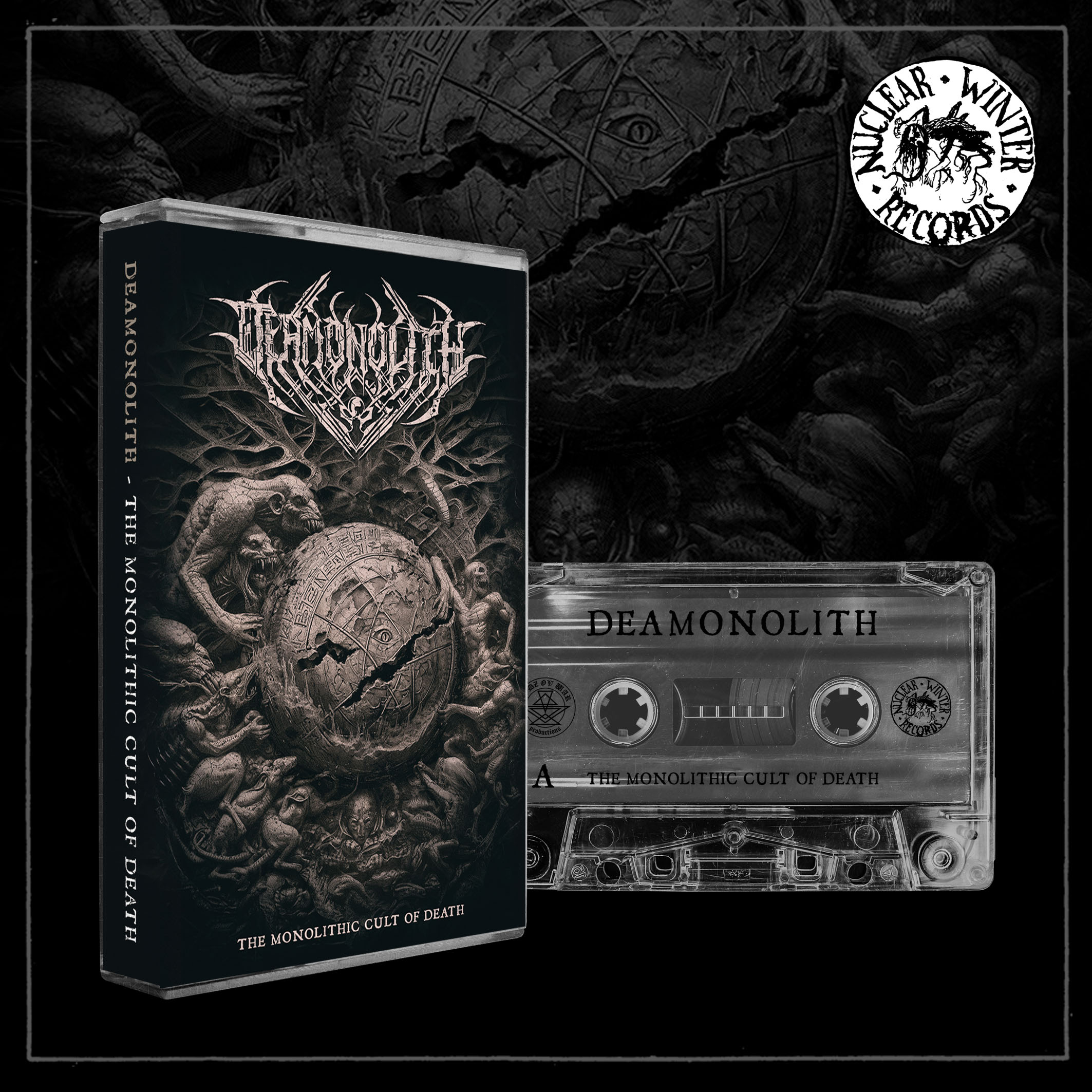
Kobuch: From the very beginning I thought of splitting a release between labels. Before the premiere of the debut album we were seeking for reliable people to cooperate in releasing it. The first edition was a CD version co-released by two Polish labels - Godz Ov War Productions and Ancient Dead Productions. An LP (12”) version released a few months after was also signed with those labels banners. Meanwhile we tried to find co-operators from abroad to re-issue a CD version (two pressings were sold out quickly). I knew that Anastasis, Nuclear Winter Records label owner, liked our album pretty much, so I asked one of our Polish label owners to get in touch with him and ask if he would be interested in releasing a cassette version of “The Monolithic Cult of Death” album. Positive reaction was immediate and now a cassette version is available in two colour versions - “smokey clear” in Greece and “solid gold” in Poland. The quantity of both of them is strictly limited, so don’t hesitate to purchase a copy if you are a tape collector. Our CD is available in Greece as well - I care about its stock on the Nuclear Winter Records web store. You may get a re-issue released by the band itself there (CD digipak version).
Do you prefer working with a label or following the DIY path and what drives that choice?
Major: Our time is limited. All band members have professional and family responsibilities. Following a DIY approach at the early stage of a band’s development would consume too much time and leave little room for creative work.
Kobuch: I did a DIY release (two CD versions and an LP version) of Sarmat’s debut album. Never again.
Are there any funny, strange or intense moments from the studio or your live performances that you’d like to share?
Kobuch: Nothing extraordinary till now. Well, each live performance is a strong emotional experience for us and we don’t need anything more to get to an altered state of mind while playing live. I know that people like spicy details from behind band activities, but I won’t fabricate false stories and will not brag for nothing.
Major: We are a rather boring team - sober and deeply focused on the music and its quality. The violent stories are buried far in the past. The only weird incident I can recall happened at a Warsaw gig, when a drunken fan threw a beer directly onto our stage equipment causing a power outage.
Which bands or artists have had the biggest influence on your sound?
Major: We need to distinguish between composition and sound respectively. We are deeply rooted in old-school death metal from the 80’s and 90’s. Personally I am also a fan of the American, Scandinavian and Polish scenes. This includes not only classical death metal bands but also groups such as Absu, Dissection, Edge of Sanity, Enslaved, Coroner, Paradise Lost, Sentenced, Misanthrope, Ancient Rites and many others. The approach to the sound has quite different references. I appreciate the production style of Grave Miasma, Cruciamentum and Dead Congregation while I am increasingly tired of overly polished, modern and plastic - sounding productions.
Desecrate: The sound of this album was no accident — we spent a lot of time talking about how we wanted it to feel and what it should say. For me, it was important that everything was played tight and with purpose — no chaos, no sloppiness. Every layer had to fit together. Production matters too, because sound quality is also an important part of the music. Bands like Death, Sepultura, Morbid Angel, Emperor, and even Pantera showed me how much skill and talent matter in music. It has to come from both the heart and the mind.
In your opinion, what does a band need to sacrifice in order to succeed? Have you made any personal sacrifices for the band?
Major: Time is the most precious and valuable resource one can sacrifice. Success is a relative term. For some it means the possibility of spreading their music worldwide with decent reception. For others it means signing with a major label and touring extensively. Personally I rarely go out and have learned to focus on activities that bring me real development in mental, spiritual and physical dimensions while avoiding thoughtless time-wasting. I also stopped drinking alcohol approximately 3 years ago. It sharpened my perception and allowed me to use the time more efficiently.
Desecrate: Hopefully, we haven’t sacrificed too much for success. Just the usual stuff — like risking our lives rehearsing during the COVID outbreak and nearly dying because of it. Looking back, it almost sounds funny now…
How would you describe your ideal live performance? Have you experienced something close to that so far?
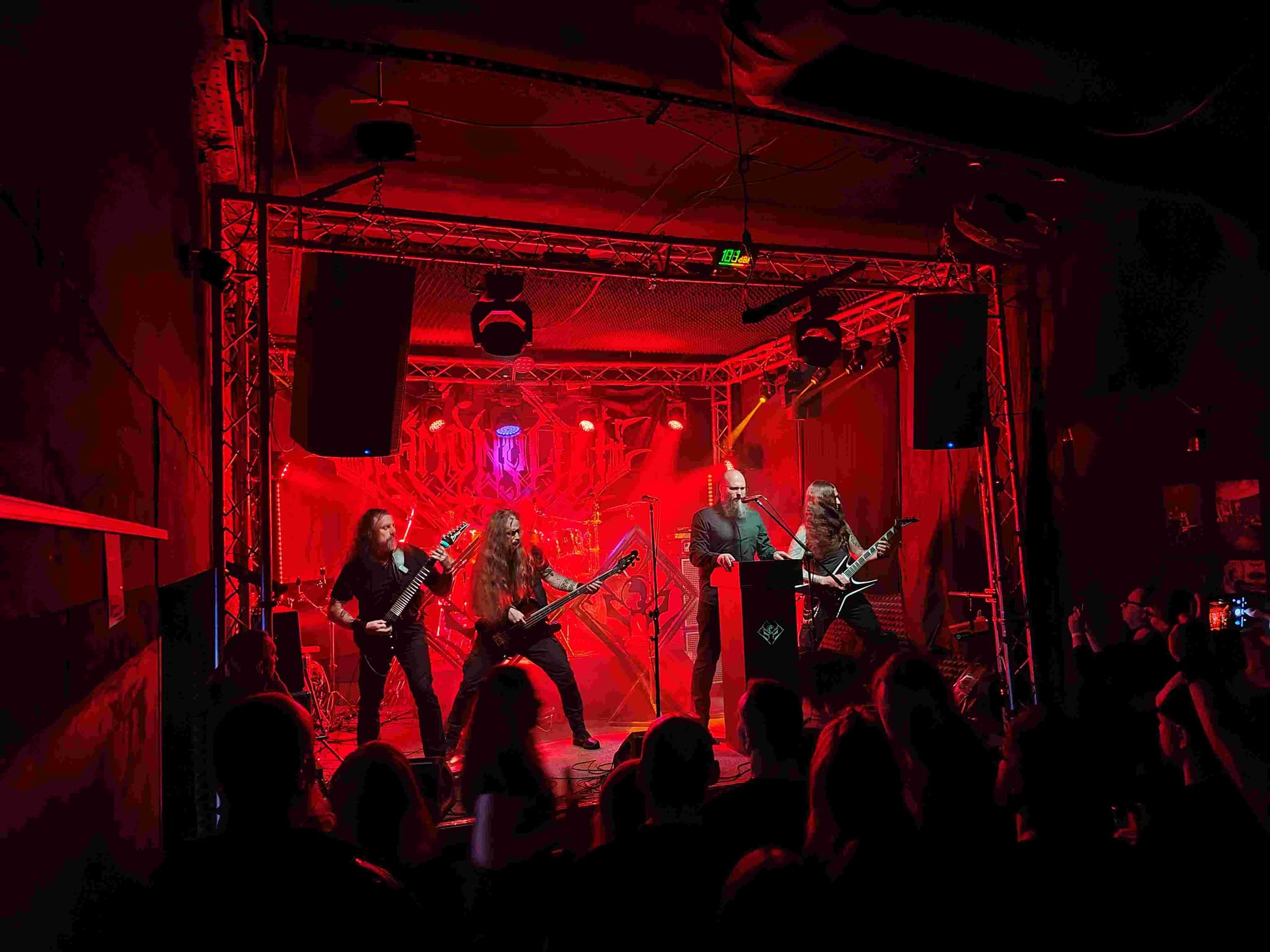
Kobuch: As I mentioned before playing live with Deamonolith is quite challenging. Due to the fact we have those created characters in the lyrics it’s not acceptable just to get on stage and play a standard, typical gig. After playing a few live shows with this band I may say that every one of them was unique. It is simply caused by our somewhat strange appearance on the stage and audience reactions to our shows. We use some steel decoration details and wooden furniture. Nothing exceptional these days, but putting them together with changing clothes by me during the show and playing specific characters on the stage we get a show that could be in a way “theatrical” described. People come to us after live performances and often say they haven’t seen something like our show before. And that’s interesting because many, many bands use set designs and costumes for their shows. Maybe none of them play anything close to a classical drama?
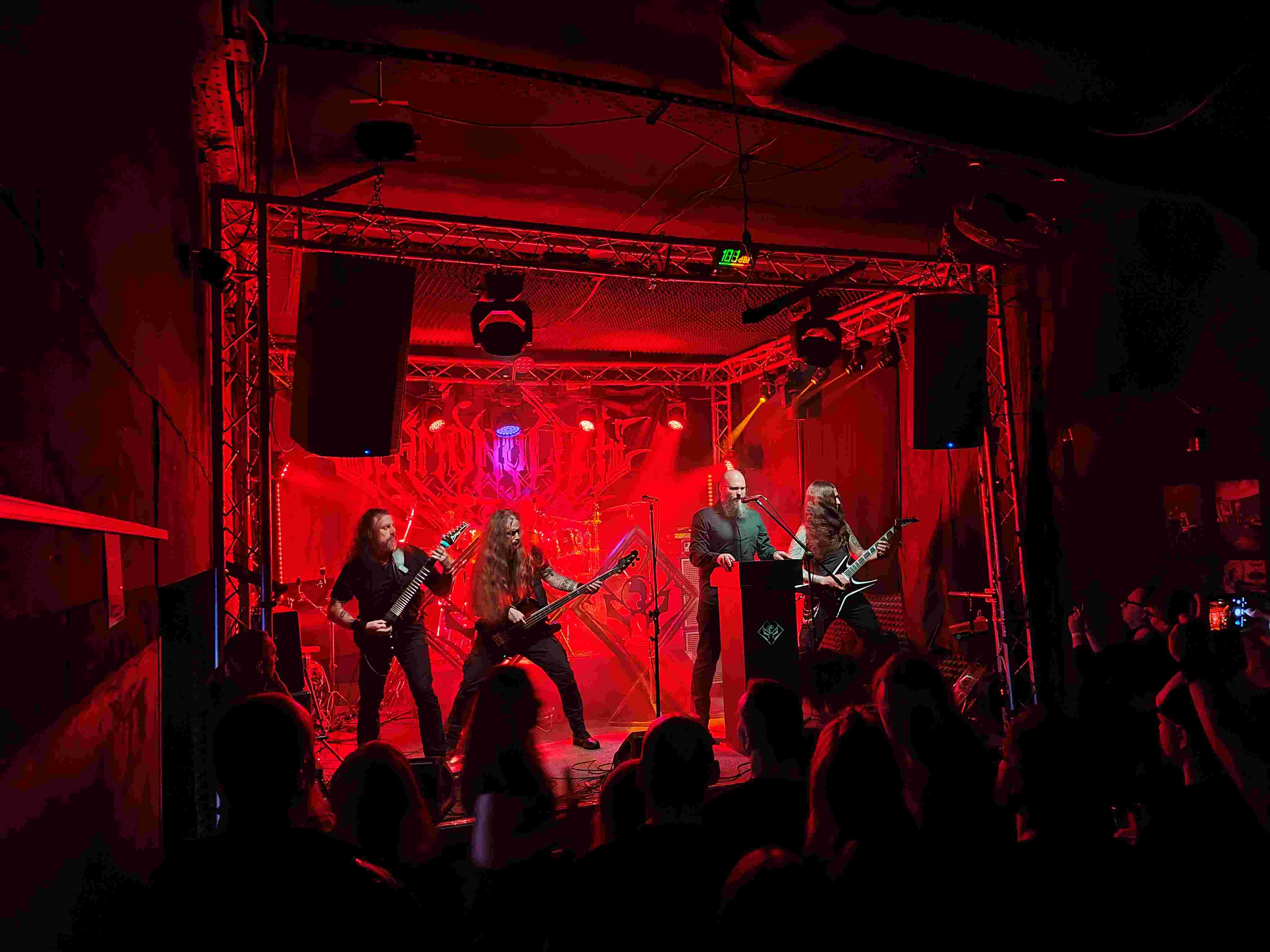
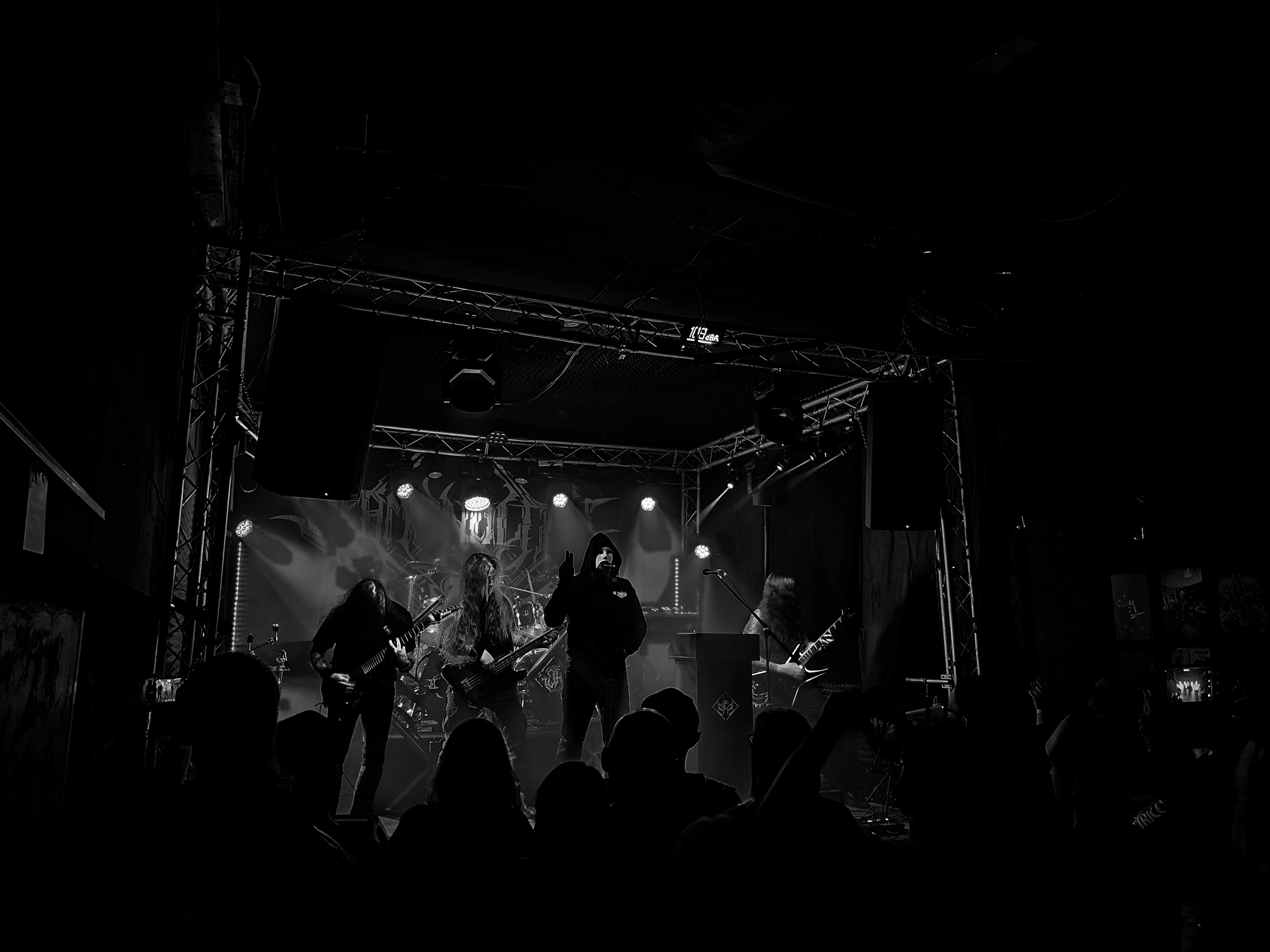
Live Photos Credit: Adam Grudzinski
What is your opinion on the rise of AI in music production?
Major: The opinion is strictly negative but I expect most recording studios will eventually use these tools. As long as they don’t collide with the live sound I can live with it. The worst thing - which is already happening - is the use of AI to compose music. That’s a Pandora’s box I swear I’ll never open but expect many do. This threat is real especially from burn-out musicians with hyper inflated egos. I can imagine mainstream professionals cutting corners feeding AI with their past best releases as well as insecure and untalented participants of the deepest depths of underground.
Desecrate: To me, AI is just a tool — but not in metal music. In metal music everything has to come from the creator: the writing, the playing - all of it. With electronic or computer-based music it feels a bit different. AI-generated sound can have its own strange charm. I do a lot of programming and that kind of odd, machine-made ambient music actually helps me focus. It feels like music made for working with machines — I talk to them and they talk back.
What qualities should a new metal band have in order to build a strong identity and stand out?
Major: Integrity, coherence, consistency and a clear vision of oneself. Eventually one needs to stand out from the crowd, which is enormous these days. But the most important factor is the ability to compose interesting music, regardless of subgenre.
Do you think digital platforms truly help new metal bands? What do you consider the most effective way to promote music today?
Kobuch: Presence on digital platforms is obligatory for bands nowadays. That’s the main opportunity to let people know your music - it’s obvious. Even if you are a physical releases collector (I collect CDs myself) the ability to check music out before purchasing a physical release simply makes life easier. Nevertheless streamings won’t promote music. You won’t get known as a band because of sharing your music there only. Too many bands, too much music. That’s how it is.
Based on your experience, what advice would you give to new bands entering the scene? What should they avoid?
Kobuch: Don’t think of earning money, realize that you will have to sacrifice a lot of your time and energy (not mentioning money to record anything, don’t start to organize gigs if you don’t have savings in your bank account. And don’t you ever dream of releasing vinyl records on your own. Unless you sleep on a bed filled with cash.
Could you share your thoughts on the underground metal scene in Poland (bands, zines, venues, etc.)?
Major: The Polish underground metal scene is vast, and I consider it one of the strongest in the world. Let’s highlight some names: Azarath, Embrional, Hellfuck, Pandemonium, Ashur, Conquest Icon, Saltus, Voidhanger, Infernal War, Deus Mortem, Neolith, Symbolical, Tenebris and Sacriversum. Some of them are linked with us personally, the rest I’ve been in touch with for years and I really appreciate their craft and unwavering underground approach. Finally I’d like to recommend a new project by Wojtek Lisicki (formerly CEO of mighty Luciferion). The band is called Thresholder and has released two singles so far. I can confidently say that these two tracks blow 99% of contemporary death metal out of the water.
Kobuch: Check out Deivos, Dormant Ordeal, Exist (thrash metal).
What does Metal mean to you? Also, name 10 albums that are part of your DNA.
Major: Metal has been an integral part of my life for over 35 years. For me engaging with music is almost a physiological act like brushing my teeth or taking a shit out of my anus. So let’s try to pick 10 albums that have had a real influence on my blood immediately. Slayer “Reign in Blood”, Edge of Sanity “Crimson”, Morbid Angel “Covenant”, Death “Individual Thought Patterns”, Vital Remains “Forever Underground”, Dissection “Storm of The Light's Bane”, Dark Angel “Darkness Descends”, Deströyer 666 “Defiance”, Enslaved “Eld” and let’s eventually throw in something from Greece - Thou Art Lord “DV8”.
Kobuch: Immolation albums from I to V, Morbid Angel discography excluding the “I” album, Deicide I - V, Vader I and II only, Incantation (not all albums, but many of them).
Desecrate: Metal is Life... and Death with all their albums :-). Sepultura with Max, Slayer, Pantera, 80s Metallica… and many more — way more than just ten.
Do you know anything about the Hellenic Metal Scene?
Major: My knowledge of the Hellenic metal scene is quite extensive. Since the early 1990’s I have followed Greek bands appreciating both their music and the philosophy behind it. I have a deep admiration for early Rotting Christ as well as Nightfall, Necromantia, Varathron, Zemial and Acherontas. Some of the most frequently played bands in my rotation are, perhaps surprisingly, Thou Art Lord and Kawir. Moving into death metal I should also mention Dead Congregation, Embrace of Thorns, Resurgency, Burial Hordes and Abyssus. I have always been struck by how many exceptional bands have emerged from Athens itself.
Kobuch: Yes, I do, but in opposite to Major I don’t like black metal music. The only exception for this statement is Necromantia. So I have one old-fashioned band from Greece on my list. But bands such as Mass Infection, Sickening Horror, Murder Made God, Birth of Depravity and memorable one Inveracity are definitely the ones that I know and which music I listen to regularly. I possess many CD records of these bands. And my girlfriend is a die-hard fan of Septicflesh (and late era Rotting Christ). I like a few Septicflesh records too (especially “Communion” Album). Last year we went together to Athens (September of 2025) to see two Septicflesh live shows with symphonic orchestra and choirs given in Odeon of Herodes Atticus. Memorable events.
What are your future plans?
Major: We have three scheduled gigs for the remainder of 2026. In early 2027 we plan to enter the studio to record our second opus. In the meantime the main goal is to complete the new compositions with dark energy, patience and focus. The rest of the future will unfold according to its destiny.
Thank you very much for your time & keep up the good work! The closure is yours.
Kobuch: Thank you kindly for your time and for your support of Deamonolith! We do appreciate that. And for the Reader - check out our music available everywhere we were able to put it (“The Monolithic Cult of Death” by Deamonolith - one continuous song lasting for 35 minutes) and, if you like it, consider buying the physical copy.
By Steve the Filthy Dog.
DEAMONOLITH CONTACT:
https://www.facebook.com/DEAMONOLITH
https://www.instagram.com/deamonolith_official_pl
https://deamonolith.bandcamp.com/merch